What is Vibe Coding?
In simple terms, Vibe Coding means you articulate your ideas in plain language, and AI takes care of converting those ideas into usable code.
Vibe Coding in 4 Steps: Easy for Beginners
-
Express Your Needs: Clearly state what you want without worrying about technical jargon. For example, say: “Help me create a shopping website where swiping left means like and swiping right means dislike, with a minimalistic and clean interface.”
-
AI Generation: Provide your requirements to AI, which will automatically handle the visual PRD, product prototype design, and front-end code, relieving you of any technical concerns.
-
View Results: Deploy with a single click in the cloud, breaking down barriers between design and development. You can modify anything you’re not satisfied with.
-
Modify Requirements: If you’re unhappy with something, you can adjust it at any time with instant feedback. For instance, say: “The button looks ugly; change it to light blue and increase the corner radius.” AI will redraw the UI instantly, and you can see the new effect by refreshing.
A No-Code Product Manager Launches a Travel Guide in 3 Hours
Case Study: Product Manager Xiao Chen, who can’t even write “Hello World”.
Objective: He wanted to create a travel website for him and his girlfriend, recommending travel guides across the country. Using UXbot and the Cursor editor, he went from idea to launch in just 3 hours.
Tool Recommendation
AI Design Code Generation: Quickly Build Websites and Apps | UXbot
UXbot is an AI-driven software design and web front-end development tool, specifically tailored for software design and development scenarios. It helps users streamline the entire process from requirement analysis to interface design and collaborative delivery, enhancing development efficiency with AI.
Practical Exercise
To validate the practical effectiveness of UXbot, we selected a “Logistics Order Management System” as the practical scenario and focused on the solution writing process for testing.
Step 1: Precisely Input Requirements for AI to Analyze Design Intent
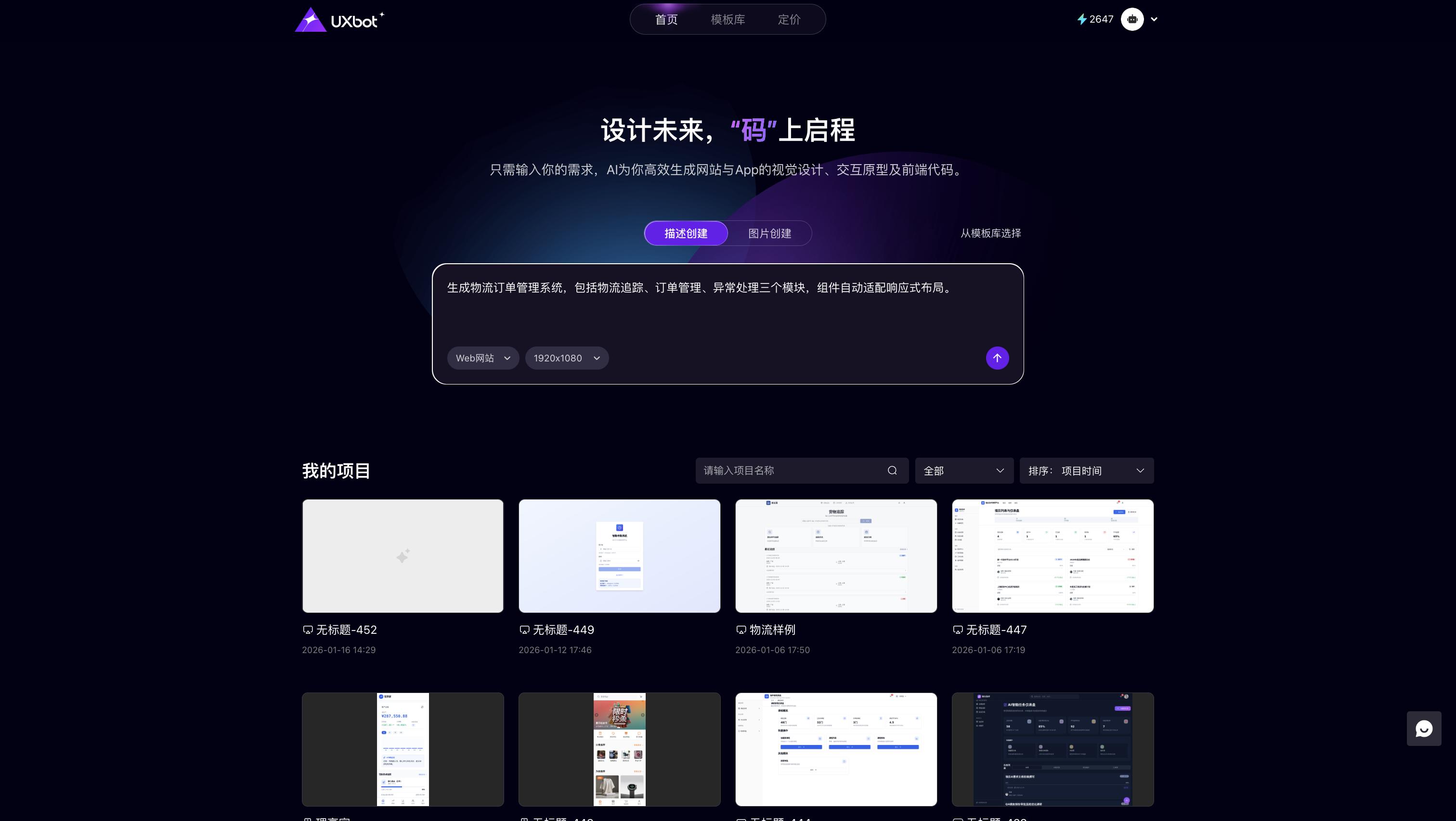
You can start generating by clearly describing UI requirements in natural language. For example: “Generate a logistics order management system that includes logistics tracking, order management, and exception handling modules, with components automatically adapting to responsive layouts.” UXbot will intelligently recognize page types, core functional modules, and structural logic, laying the foundation for accurate generation.
Step 2: Visual PRD Smart Generation
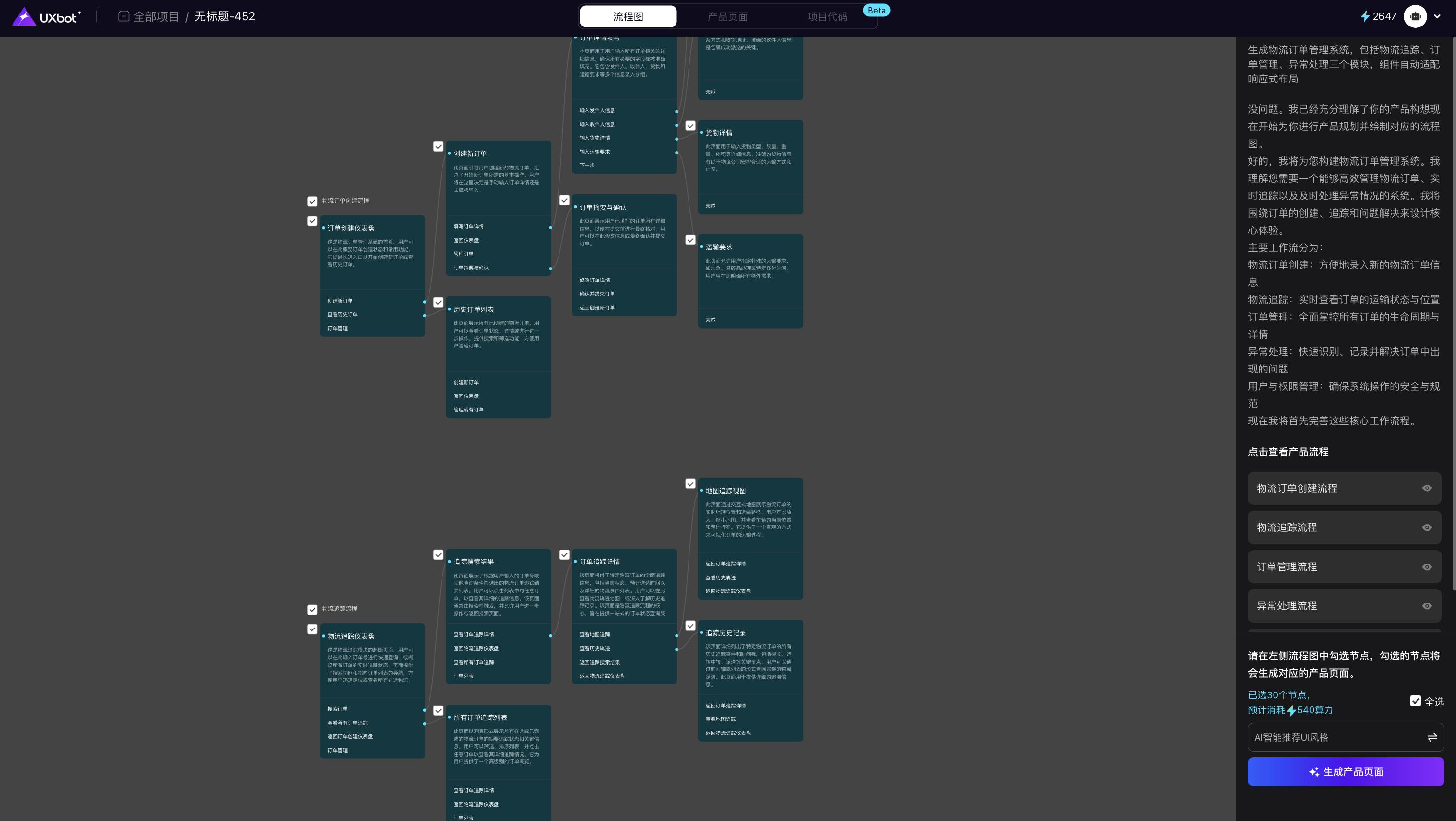
The visual PRD presents the core logic, functional modules, and user paths of the product in an intuitive flowchart format, systematically integrating and presenting them. This helps users quickly grasp the overall architecture and operational logic of the product, while also validating the flow to identify and fill in any gaps or breaks in the product logic.
Step 3: AI Automatically Generates High-Fidelity UI Interfaces
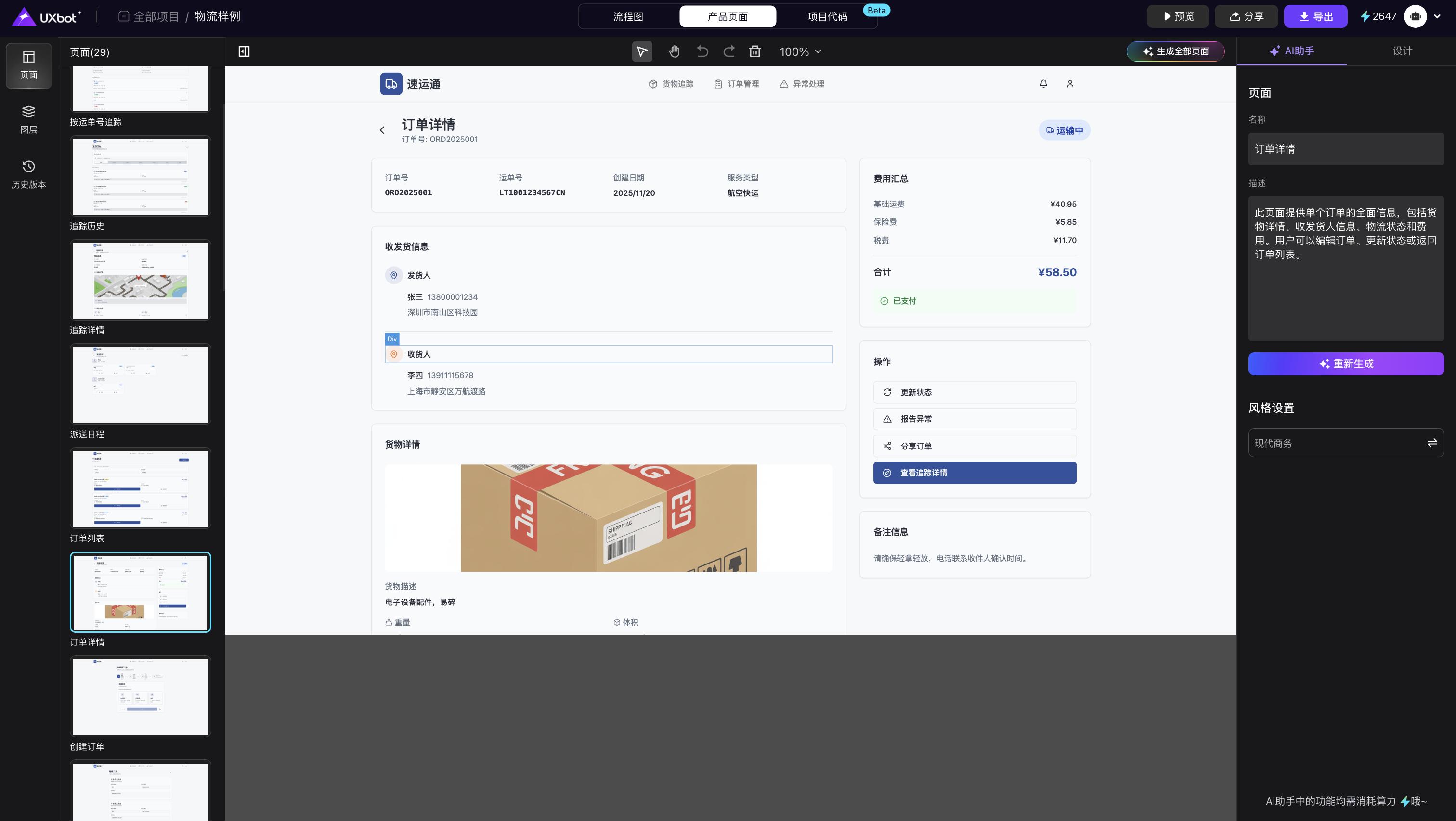
Based on the requirement analysis results, UXbot will automatically build the page structure, match UI components, and unify the visual style, outputting a complete high-fidelity interactive interface within seconds. The generated interface supports page transitions and demonstrations, allowing direct use for team reviews or requirement discussions, completely eliminating the lengthy iteration process from low-fidelity to high-fidelity.
Step 4: Secondary Editing and Interaction Logic Refinement
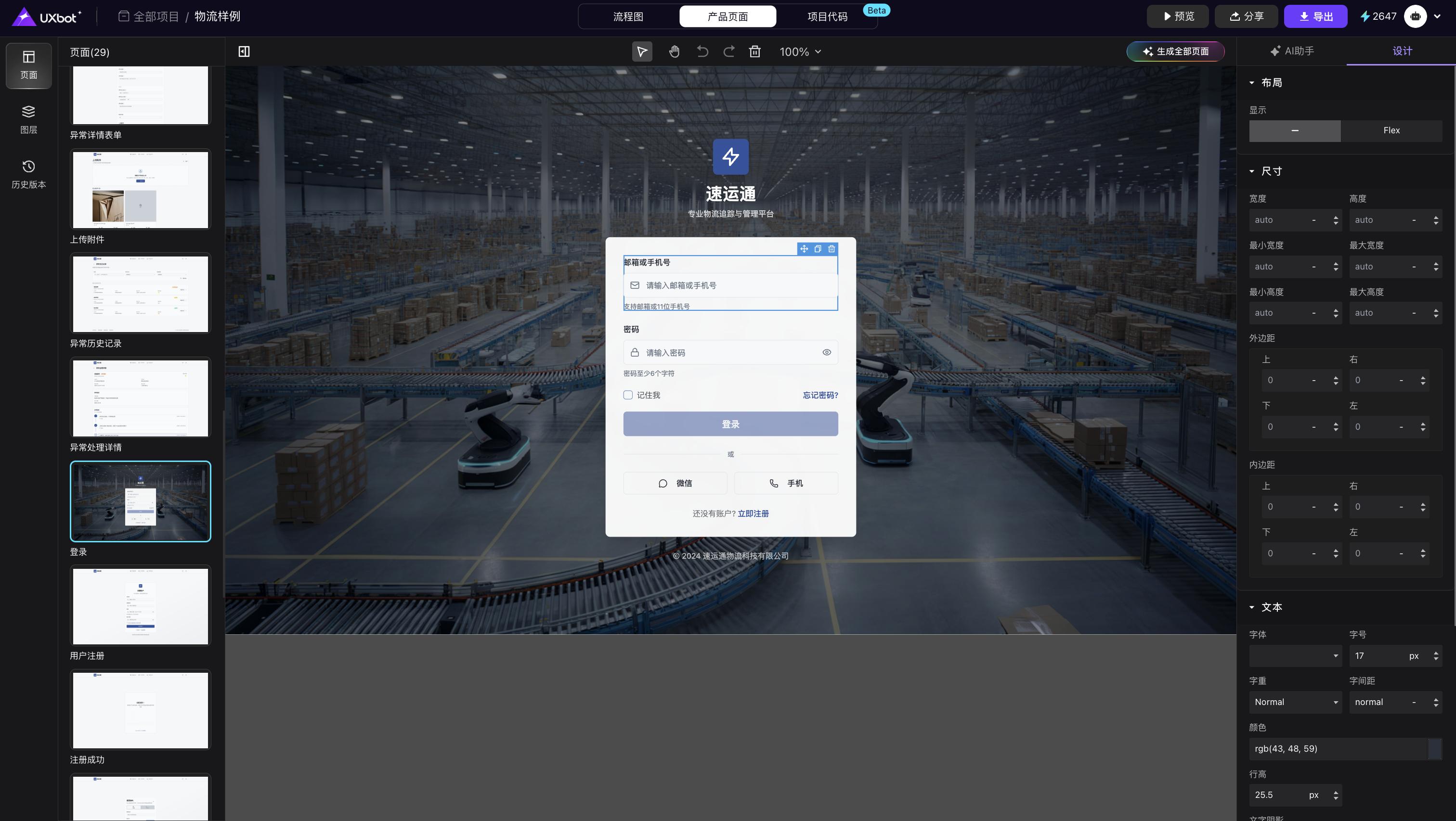
Equipped with an AI assistant and a professional-grade precision editor, users can perform pixel-level detail control, layout adjustments, style iterations, and graphic updates, accurately matching requirements while balancing creativity and design professionalism.
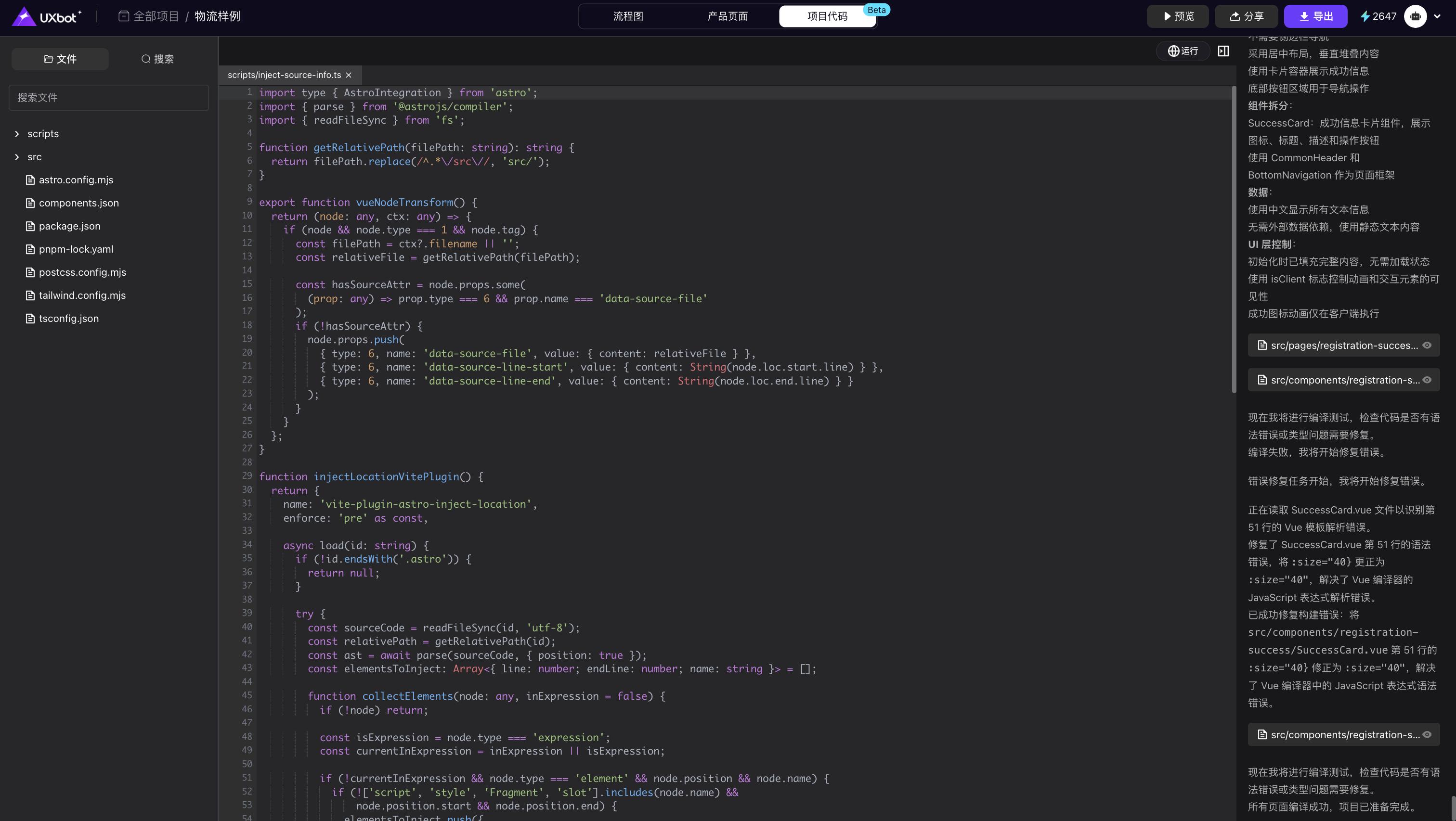
Step 5: Web Front-End Code Generation
Once the interface design is confirmed, it will automatically generate usable front-end code, compatible with commonly used frameworks like Vue.js. The design effects and code can seamlessly connect, and you can even deploy it directly to a cloud server, eliminating concerns about design and development disconnection.
Conclusion
By 2025, Silicon Valley is already offering six-figure salaries to hire “Vibe Coders” who can articulate requirements. Even if you can’t code at all, you might become the next independent developer of a blockbuster product.
Vibe Coding doesn’t mean abandoning programming entirely; rather, it allows you to delegate repetitive, tedious, and non-technical tasks to AI. You can focus on the core aspects—refining ideas, optimizing products, and uncovering user value.
In the AI era, what’s truly valuable is not whether parentheses go on the left or right, but that unique, compelling idea that resonates with users.
Comments
Discussion is powered by Giscus (GitHub Discussions). Add
repo,repoID,category, andcategoryIDunder[params.comments.giscus]inhugo.tomlusing the values from the Giscus setup tool.